Rule 1: Level, Firm Ground
A porta potty is a tall, light box with a liquid tank in the base — geometry that punishes bad ground. Put it on pavement, compacted gravel, or firm level soil. Avoid anything more than a few degrees of slope (doors swing themselves shut or open, tanks slosh unevenly) and avoid soft or freshly graded ground, which settles after the first rain and leaves the unit leaning within a week.
Rule 2: Truck Access — the 25-Foot Rule
The most-missed rule. Every service visit, our pump truck needs to park within about 25 feet of the unit, with an approach at least 10 feet wide and roughly 13 feet of overhead clearance for the truck itself. A unit tucked behind a fence, up a flight of steps, or across a lawn the truck can't cross may be deliverable by hand once — but it can't be pumped weekly. If the gate is locked on service days, leave us a code or a contact.
Rule 3: Distance From Food & Gathering Areas
For events, the sweet spot is 50–100 feet from food service, seating, and tents, positioned downwind where the site allows. Closer than that and odor on a warm afternoon becomes part of the catering; much farther and guests either queue at the near units or wander. On a big footprint, split units into two or three clusters at the crowd's natural edges rather than one distant bank — the event capacity guide covers cluster sizing.
Rule 4: ADA Path of Travel
Renting an ADA unit only helps if a wheelchair can reach it. The route from accessible parking (or the main event area) to the unit door needs to be firm, stable, and at least 36 inches wide, with no steps, curbs, or soft grass — pavement, packed gravel, or mats over turf all work. Set the ADA unit at the end of the bank nearest the accessible route, with a level 5-foot square in front of the door for the turn-in. When accessibility is a legal requirement for your event or project, the ADA requirements guide covers the obligations.
Rule 5: Check Overhead & Surroundings
- Overhead: no low branches or wires along the delivery path — the truck needs roughly 13 feet of clearance to maneuver and set the unit.
- Drainage: keep units out of runoff paths and away from storm drains; on permitted construction sites, a containment tray underneath is often required and always cheap insurance.
- Visibility: a lit, visible spot deters after-hours vandalism and tip-overs — the most common long-term rental damage.
- Wind exposure: on open fields and shore sites, favor a windbreak (building edge, tree line) or ask us about staking/ballast for exposed placements.
- Job-site specifics: keep units out of crane swing radii and delivery lanes — the construction site guide covers active-site placement in depth.
Not sure? Describe the spot at booking.
Our drivers place units all day, every day. Tell us what the ground, gate, and approach look like when you book, and we'll confirm the spot works — or suggest one 20 feet away that works better. Book online or call (732) 592-1800.
Placement-Friendly Additions
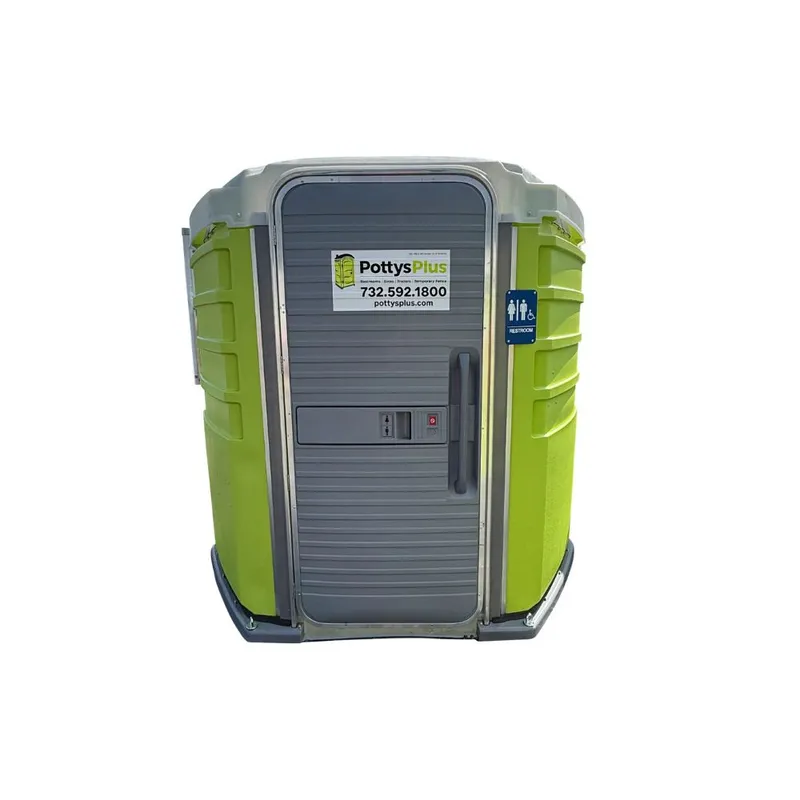
ADA Compliant Unit
Zero-step entry and full turning radius — place it nearest the accessible route.
View unit →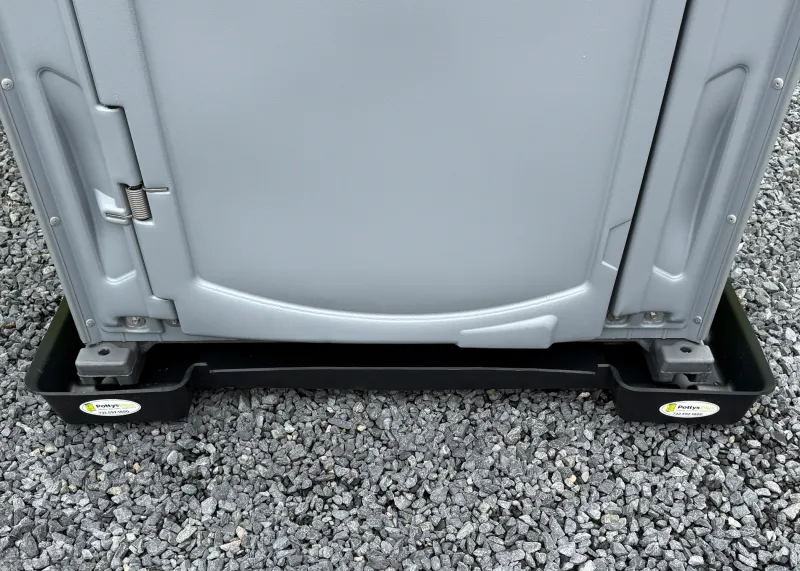
Containment Tray
Spill protection under any unit near drains, pavers, or sensitive ground.
View unit →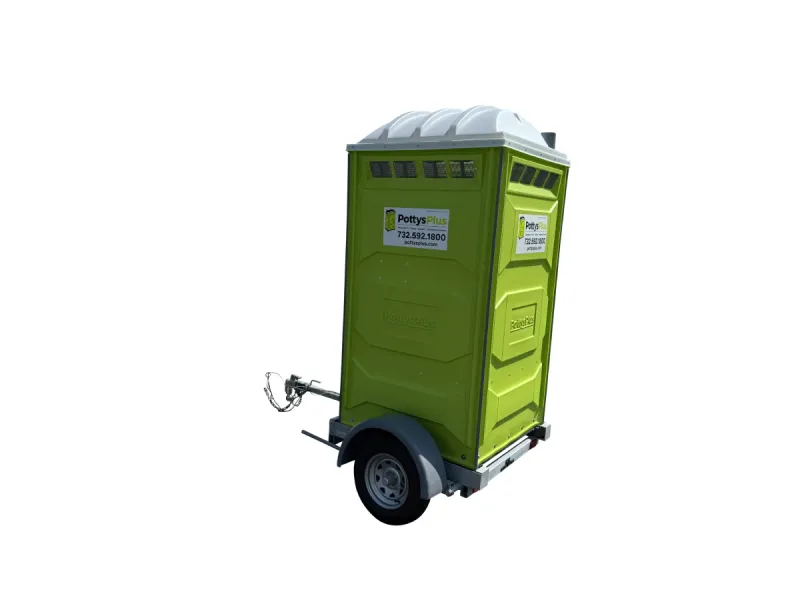
Trailer-Mounted Unit
When no single placement works all week — tow the restroom to the work.
View unit →