The OSHA Rules, Summarized
Private construction sites in New Jersey answer to federal OSHA — there is no separate, softer state plan for private employers. The controlling standard is 29 CFR 1926.51, and it makes three demands of you:
- Provide toilets at the required ratio. 1926.51(c) sets a sliding scale: one toilet for crews of 20 or fewer, then one toilet seat and one urinal per 40 workers for crews of 20–199, and per 50 workers at 200+.
- Keep them clean and sanitary. The count alone doesn't save you — an overflowing or unusable unit is a citable condition even if the math checks out. A documented weekly service schedule is your defense.
- Provide washing facilities where required. 1926.51(f) requires washing facilities for workers handling harmful substances (paints, coatings, herbicides, and similar). It is not a blanket mandate for every site, but a hand wash station beside your toilet bank is inexpensive, expected by many project owners, and squarely required on those scopes.
For the full regulatory breakdown — enforcement, inspection triggers, and penalty context — see our dedicated OSHA portable sanitation requirements guide.
Unit Counts by Crew Size
OSHA's ratio is a legal floor, not a productivity plan. The field guideline most NJ contractors actually use is one unit per 10 workers per 8-hour shift — it keeps lines short, keeps trades on site, and gives you slack when one unit goes down.
| Crew Size | OSHA Minimum | What We Recommend |
|---|---|---|
| 1–10 workers | 1 unit | 1 unit |
| 11–20 workers | 1 unit | 2 units |
| 21–40 workers | 1 unit | 3–4 units |
| 41–80 workers | 2 units | 4–8 units |
| 81–120 workers | 3 units | 8–12 units |
| 121–200 workers | 4–5 units | 12–20 units |
Two adjustments worth making: add roughly 20% capacity if the crew skews toward long uninterrupted pours or roadwork where breaks bunch up, and dedicate at least one ADA-compliant unit on public-works and federally funded projects. For a deeper crew-by-crew breakdown including mobile-crew and multi-floor scenarios, see requirements by crew size or run your numbers on the capacity calculator.
Placement on an Active Site
Where units go matters as much as how many you order. Bad placement is the number-one reason crews skip the on-site unit and disappear to a gas station. The rules of thumb:
- Within a short walk of the work face. Aim for units no more than a 2–3 minute walk from where trades are actually working. On a large footprint, split the bank into clusters rather than one central row.
- Level, firm ground. Units belong on compacted gravel, pavement, or plywood pads — not on slopes or soft graded soil where they tip or sink after rain.
- Truck-accessible for service. Our pump truck needs to get within about 25 feet of every unit at each visit. Don't fence units behind material laydown or trench spoils that grow over the project's life.
- Away from storm drains. On NJDEP/NJPDES-permitted sites, keep units off drainage paths and add a containment tray under each unit near a drain or waterway — many NJ municipalities require it.
- Out of the swing radius. Keep units clear of crane picks, delivery lanes, and demolition drop zones so they survive the project.
For clearance dimensions, ADA path-of-travel, and food-area distances with diagrams, see the full porta potty placement guide.
Multi-story? Sanitation goes vertical too.
Once a building climbs past a few floors, ground-level units stop working — a round trip from floor 12 kills half an hour. Plan for high-rise units that ride the hoist or service elevator, or crane-sling units where no elevator access exists. Our high-rise & crane-sling guide covers floor-by-floor strategy.
Service: The Half of Compliance Everyone Forgets
Every Pottys Plus construction rental includes weekly pump-out, sanitizing, and restock, and we keep the service records so you can produce them if an inspector asks. Bump to twice-weekly service when a unit serves more than about 10 workers on full shifts, when summer heat accelerates odor, or when the site runs extended hours. Mid-project changes are normal — crews grow and shrink, and with 24 hours' notice we add or pull units with billing prorated. The service frequency guide shows how to match visits to traffic.
Winter on a NJ Job Site
New Jersey winters are hard on portable sanitation, and January concrete pours don't pause for it. What changes when the temperature drops:
- Winterized holding tanks. From roughly December through March we charge tanks with a non-toxic brine solution that keeps waste liquid and pumpable in sub-freezing weather. Untreated tanks freeze solid and can crack.
- Placement shifts. Put winter units where plows won't bury them and where morning ice won't turn the approach into a slip hazard — south-facing, wind-sheltered spots near heated break areas get the most use.
- Doors and latches. Wind-driven snow works into door edges. We check and clear latches at every winter service visit; ask your crew to report a frozen door rather than forcing it.
- Hand wash stations in freezing weather. Freshwater sink tanks can freeze. On winter scopes that require washing facilities, we swap in sanitizer stands or place wash stations inside heated enclosures — flag it when you book and we'll plan it with you.
- Service continuity. Snow days interrupt access. Keep a plowed path to the unit bank and we'll keep the weekly schedule through the season.
What It Costs
Construction rentals are priced by unit type, rental duration, and service frequency, with monthly billing on long-term contracts. Rather than quote stale numbers here, see the NJ construction pricing guide for how monthly rates and service tiers work — or get your exact figure in the online checkout in under two minutes.
Related Reading
Start-to-finish job-site setup lives on our construction porta potty rental service page. For the compliance layer, read the OSHA requirements guide and the NJ regulations guide. Going vertical? The high-rise & crane-sling guide is next.
Units Built for Job Sites
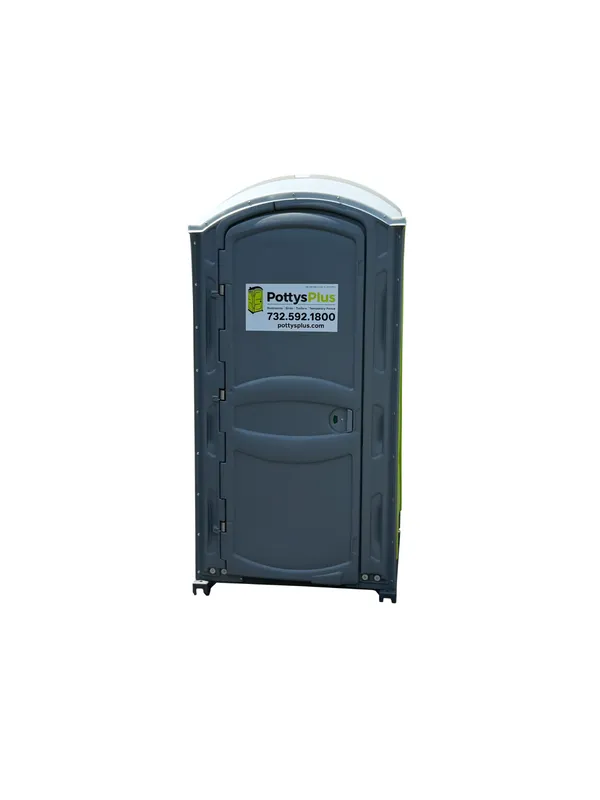
Standard Porta Potty
The job-site workhorse — one seat plus interior urinal satisfies both halves of the OSHA ratio.
View unit →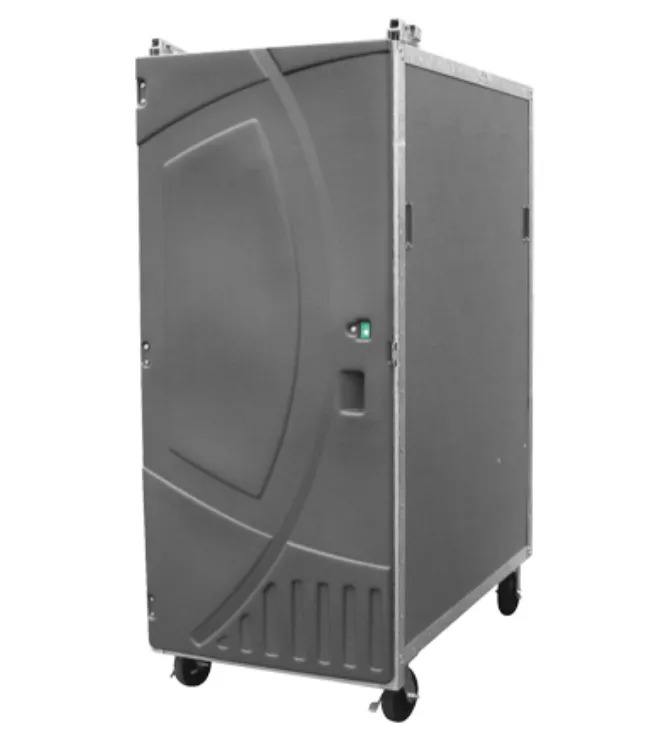
High-Rise Unit
Rolls into service elevators and through standard doorways — restroom access on the active floor.
View unit →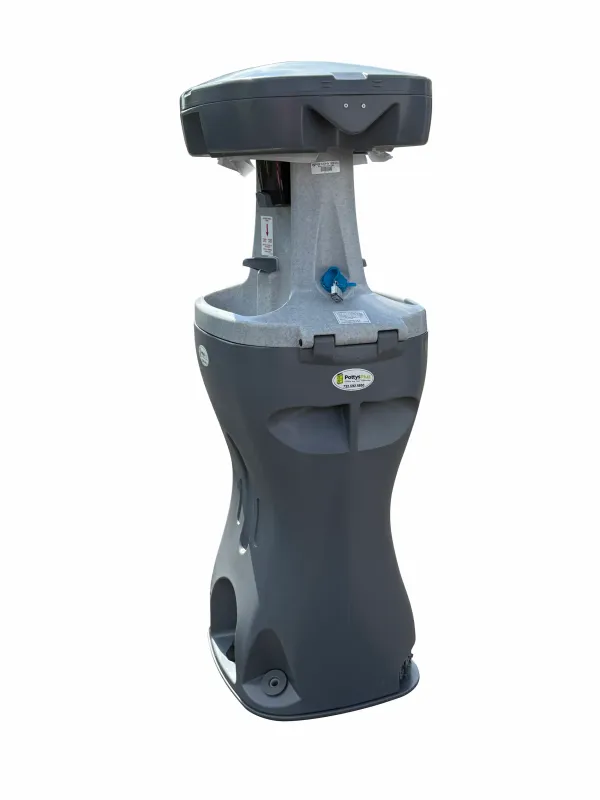
Dual Hand Wash Station
Foot-pump sinks, soap, and towels beside the toilet bank — no plumbing hookup required.
View unit →