Who Enforces OSHA Sanitation Rules in New Jersey?
New Jersey does not run its own state OSHA plan for private-sector employers. That means private construction sites in NJ answer directly to federal OSHA — the same 29 CFR 1926 standards that apply nationwide, enforced out of OSHA's federal area offices in the state. (Public-sector employees are covered separately by NJ PEOSH, the state's Public Employees Occupational Safety and Health program, which adopts the federal construction standards.)
The practical takeaway: if you are a general contractor or subcontractor running a private job site in New Jersey, there is no softer state version of the sanitation rules. The federal text below is the standard you'll be measured against. Layer that on top of the state and county environmental rules covered in our NJ portable toilet regulations guide, and you have the full compliance picture.
Toilet Ratios: 29 CFR 1926.51(c)
The core requirement lives in 29 CFR 1926.51(c)(1): employers must provide toilets at construction job sites according to a sliding scale tied to the number of workers. Below 20 workers the rule is simple — one toilet. Above 20 it shifts to a ratio of toilet seats plus urinals per worker.
| Number of Workers | Minimum Facilities Required |
|---|---|
| 20 or fewer | 1 toilet |
| 20 to 199 | 1 toilet seat and 1 urinal per 40 workers |
| 200 or more | 1 toilet seat and 1 urinal per 50 workers |
To turn that regulation into an order sheet, here is how it plays out at real crew sizes. Note that a single-occupant portable toilet with an interior urinal counts as one seat plus one urinal, so most standard units satisfy both parts of the ratio at once.
| Crew Size | OSHA Minimum | Practical Recommendation |
|---|---|---|
| 1–20 workers | 1 unit | 1–2 units |
| 21–40 workers | 1 unit | 2–4 units |
| 41–80 workers | 2 units | 4–8 units |
| 81–120 workers | 3 units | 8–12 units |
| 121–160 workers | 4 units | 12–16 units |
| 200+ workers | 1 per 50 | 1 per 10 |
The gap between the OSHA minimum and the practical recommendation is deliberate. The regulation is a floor, not a comfort standard. Most NJ contractors follow the widely used field guideline of one unit per 10 workers per 8-hour shift, which keeps wait times down, reduces off-site bathroom breaks that eat into billable hours, and stretches the interval between required servicing. For a crew-size-by-crew-size breakdown with mobile-crew and multi-floor scenarios, see our porta potty requirements by crew size guide, or run the numbers on the capacity calculator.
The 90-day / mobile-crew exception
29 CFR 1926.51(c)(4) allows mobile crews to use transportation to nearby toilet facilities where the work location changes frequently — but the facilities must be readily accessible. On a fixed site, this exception does not apply. When in doubt, place a unit on site: a stationary standard portable toilet is far cheaper than a citation.
Handwashing: 29 CFR 1926.51(f)
This is the provision contractors most often misread. Section 1926.51(f) requires employers to provide adequate washing facilities specifically for workers engaged in operations where they handle harmful substances — paints, coatings, herbicides, insecticides, or other contaminants. It is not a blanket handwashing mandate for every job site. That said, providing handwashing near the toilet bank is inexpensive, strongly recommended practice: it supports the sanitary-condition duty, it's expected by many GCs and project owners as a site standard, and on any scope that does involve harmful substances it is squarely required.
A dual hand wash station placed beside your toilet bank covers both cases cleanly: foot-pump fresh-water sinks, soap, and towels, with no plumbing hookup required. On lead-paint abatement, coating, or pesticide-related work, washing facilities are an explicit condition of 1926.51(f) and a common inspection finding when missing; on other scopes they're a low-cost way to keep the site sanitary and crews on-site.
The Servicing & Sanitary-Condition Duty
Providing the units is only half the obligation. 29 CFR 1926.51(c)(1) also requires that toilet facilities be maintained in a clean and sanitary condition. A unit that is overflowing, out of paper, or foul is a violation even if the count on paper is correct. OSHA has consistently cited employers for filthy or non-functional facilities regardless of the ratio.
The defensible way to meet this duty is a documented service schedule. For a standard NJ crew, weekly pump-out, sanitize, and restock is the baseline — high-traffic or large crews warrant two or three visits a week. Every Pottys Plus rental includes weekly pump, sanitize, and restock as standard, and we retain the service records so you can produce them at inspection. For how to match frequency to your traffic, see the service frequency guide.
What OSHA Inspectors Actually Check
When a compliance officer arrives — whether for a programmed inspection, a complaint, or after an incident — sanitation is a quick, visible item they can verify in minutes. Expect them to look at:
- Count versus crew. They'll estimate the number of workers on site and compare it to the number of usable toilets against the 1926.51(c) ratio.
- Functional and stocked. Units must be usable — not tipped, not overflowing, with paper and a working door latch.
- Handwashing present. Soap, water, and towels near the toilets, especially on sites with hazardous materials.
- Accessibility. Facilities must be reasonably close to the work area, not a quarter-mile away across an active site.
- Servicing evidence. A sanitary condition on the day of the visit, backed by service records if questioned.
Penalty Context
Sanitation citations are typically classified as serious or other-than-serious violations. Federal OSHA penalty maximums are adjusted annually for inflation, and a single serious violation can run into thousands of dollars — with willful or repeat violations carrying dramatically higher maximums. Beyond the dollar figure, a sanitation citation invites a broader inspection and can affect your standing on future bids. The economics almost always favor over-ordering units and locking in weekly service. (Penalty amounts change each year; treat any figure as directional and confirm current maximums with OSHA.)
Related Reading
This guide covers the federal workplace layer. For the New Jersey state and county picture — NJDEP waste hauling, permits, and containment — see the NJ portable toilet regulations guide. For accessibility on public-works and mixed-use sites, see the ADA portable toilet requirements guide. If you're staffing a job site from scratch, start with our NJ construction porta potty rental overview, or browse all Resources & Guides.
Units That Keep Your Site Compliant
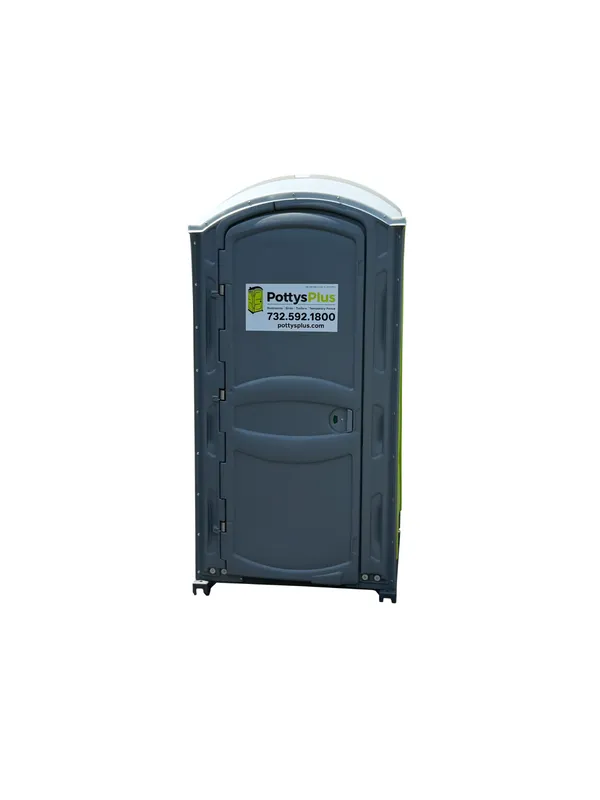
Standard Porta Potty
One seat plus interior urinal — satisfies both halves of the 1926.51(c) ratio in a single unit.
View unit →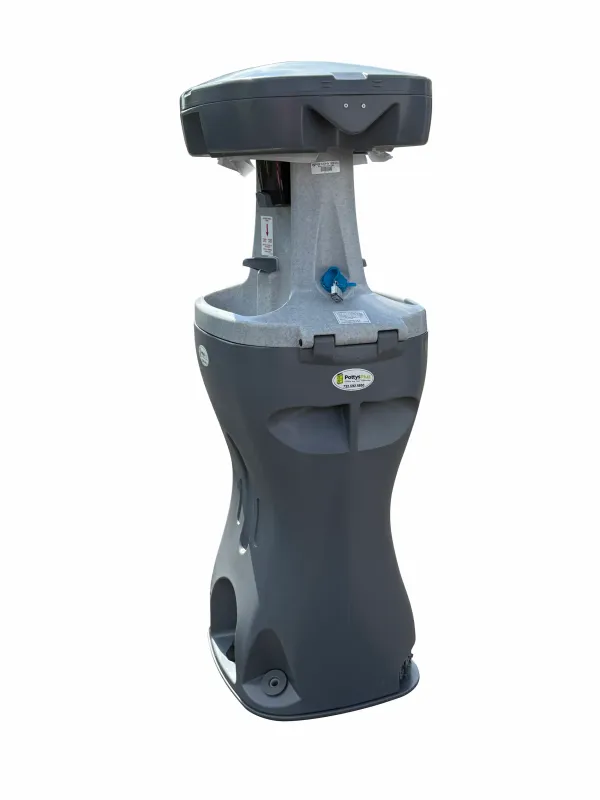
Dual Hand Wash Station
Meets the 1926.51(f) washing-facility requirement — foot-pump sinks, soap, and towels, no plumbing needed.
View unit →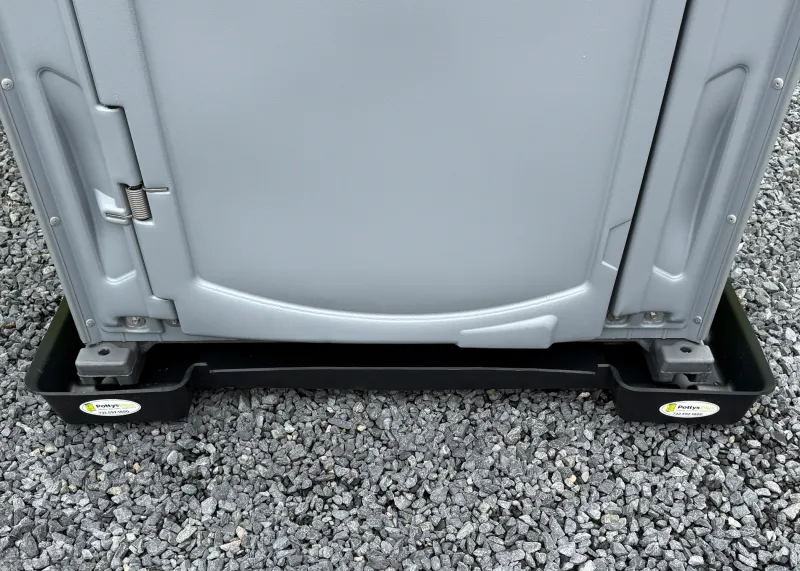
Containment Tray
Secondary containment for units near storm drains on active NJPDES-permitted construction sites.
View unit →