The OSHA Rule in One Sentence
OSHA 29 CFR 1926.51(c) requires that construction employers provide toilets on site scaled to the number of workers. The regulation sets three tiers, and the count you're legally obligated to provide steps up as the crew grows. Before you read the table, one clarification that trips people up: OSHA counts workers on site, meaning the peak crew present at one time — not the total headcount that rotates through the project over its life.
The Threshold Table
Here are the exact minimums straight from the regulation:
| Workers on site | Minimum required | OSHA basis |
|---|---|---|
| 20 or fewer | 1 toilet | 1926.51(c) |
| 20 to 199 | 1 toilet seat + 1 urinal per 40 workers | 1926.51(c) |
| 200 or more | 1 toilet seat + 1 urinal per 50 workers | 1926.51(c) |
So a 40-person crew needs 1 seat plus 1 urinal; an 80-person crew needs 2 of each; a 250-person crew (in the 200+ tier) needs 5 seats plus 5 urinals. Note that under the rule, a urinal may substitute for a portion of the toilet fixtures, but you must always maintain the required number of toilet seats. When in doubt, count seats first.
The Practical 1-Per-10 Guideline
Meeting the legal minimum keeps you compliant. It does not keep your crew from waiting in line or your units from overflowing before the next service visit. That's why experienced GCs plan to the field standard of one unit per 10 workers per 8-hour shift.
The gap matters most in the 20–199 tier, where OSHA allows one fixture per 40 workers but real usage on a busy site pushes a unit well past comfortable capacity between weekly services. Compare the two:
| Crew size | OSHA minimum | Practical (1 per 10) |
|---|---|---|
| 10 | 1 | 1 |
| 20 | 1 | 2 |
| 40 | 1 seat + 1 urinal | 4 |
| 80 | 2 seats + 2 urinals | 8 |
| 120 | 3 seats + 3 urinals | 12 |
| 200 | 4 seats + 4 urinals | 20 |
Which should you use? Compliance requires the minimum; productivity rewards the practical number. Most of our NJ contractors land between the two — comfortably above the OSHA floor without over-ordering. Run your crew size through the calculator to see a recommended count, or start from the master how many porta potties do I need? guide for the full picture.
Shift-Length Adjustments
The 1-per-10 rule assumes a standard 8-hour shift. Two situations change that:
- Extended shifts (10–12 hours). Each unit absorbs more use per day, so add roughly 20–25% capacity — a 40-person crew on 12-hour shifts is better served by 5 units than 4.
- Multiple shifts / around-the-clock work. If two crews use the same units back-to-back, size to the combined daily throughput and step up service frequency rather than just adding units. See the service frequency guide.
Pair Toilets With Handwashing
OSHA 1926.51(f) requires washing facilities where crews handle harmful substances — paints, coatings, herbicides, and similar contaminants — so on those scopes, handwashing is a hard requirement. On every other site it's strongly recommended practice: it supports the sanitary-condition duty and is a standard expectation from GCs and project owners. The pairing rule of thumb is one wash station per two toilets. A dual hand wash station with two foot-pump sinks covers that ratio with no plumbing required and gets restocked at every service visit.
Vertical projects need special units
On high-rise builds, standard units can't reach upper floors. A high-rise unit is engineered to roll into elevators and be crane-lifted between floors, keeping toilets close to the crew instead of forcing long trips to grade. Factor one placement per active floor or work zone into your count.
When to Add Units Mid-Project
Crew size rarely stays flat across a build. Add units — don't wait for a complaint — when any of these happen:
- The crew grows past a threshold. Crossing 20, then every 40 (or every 10 on the practical scale), tips you into needing another unit.
- New trades mobilize. When framing, MEP, and finishes overlap, headcount spikes; scale up before the peak, not during it.
- Work zones spread out. A sprawling or multi-level site needs units distributed so no worker walks more than a couple of minutes — that often means more units than headcount alone suggests.
- Units fill up between services. If a unit is near capacity at the weekly visit, add a unit or increase service frequency.
Adding a unit mid-project is easy — book online for instant pricing with same-day delivery on qualifying orders, or call 732-592-1800. Running a large or long build across NJ? Our construction sanitation program manages fleet placement and scaling for you, and we service every job site in the state — from Newark to Toms River.
Staying Inspection-Ready
Beyond count, OSHA and NJ inspectors expect units to be maintained in a sanitary condition with documented servicing. Every Pottys Plus rental includes weekly pump, sanitize, and restock as standard, with service records available. For the state and county side of the compliance picture, see the OSHA portable sanitation requirements guide.
Units Built for Job Sites
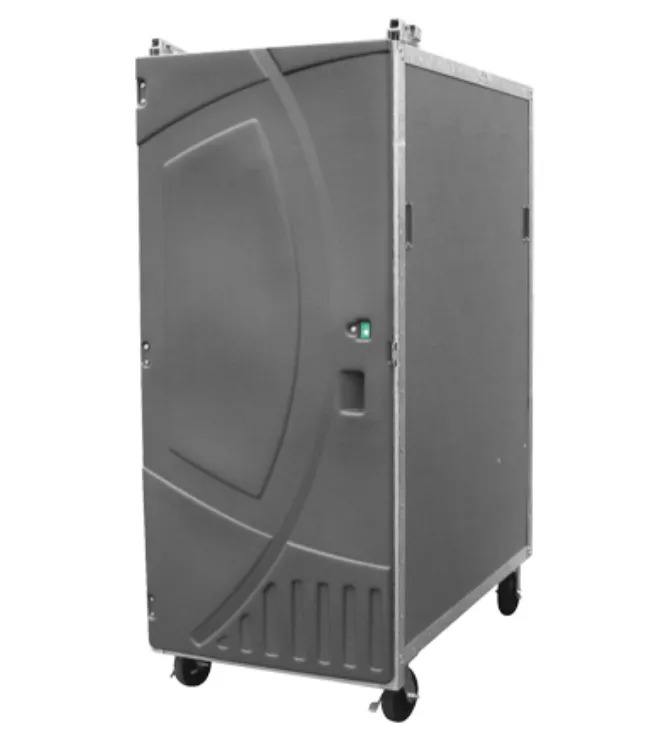
High-Rise Unit
Rolls into elevators and lifts by crane — keeps toilets on the floor where the crew is working.
View unit →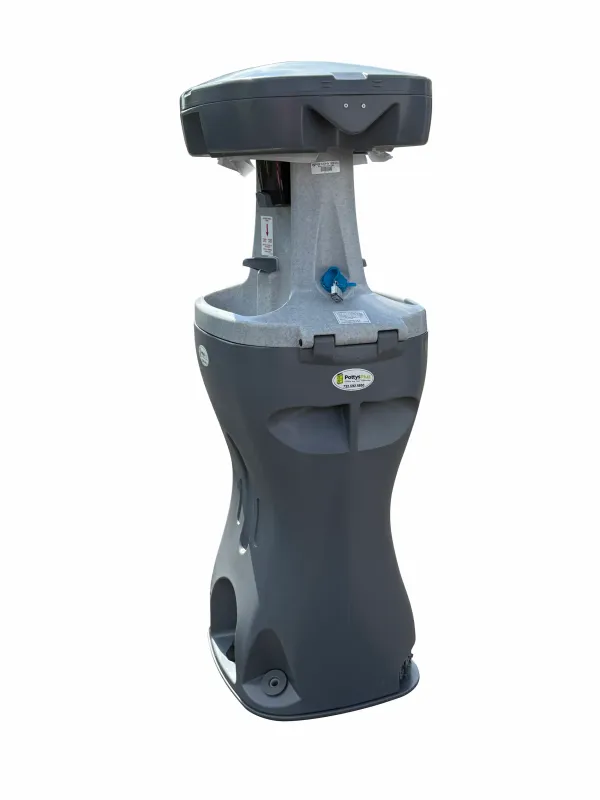
Dual Hand Wash Station
Required on hazardous-material scopes, smart everywhere — one station covers about two toilets.
View unit →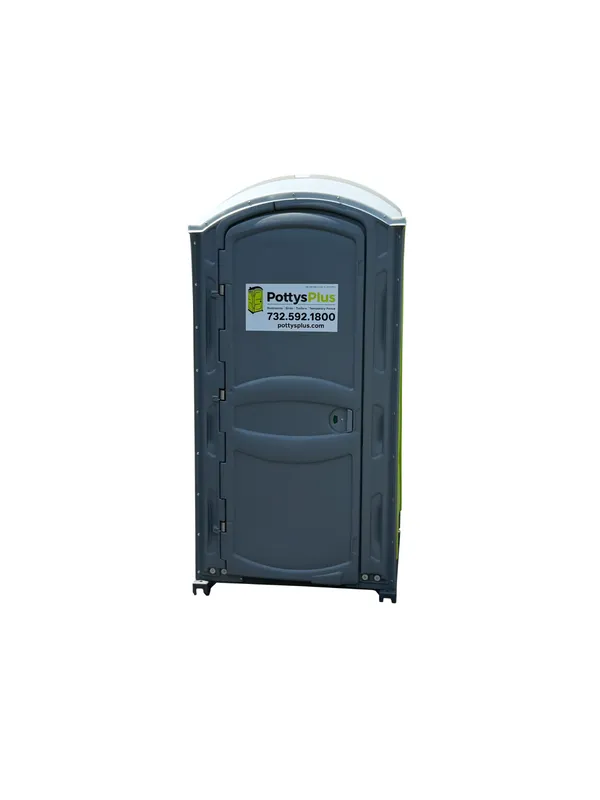
Standard Porta Potty
The everyday job-site unit — durable, stocked on delivery, weekly service included.
View unit →