Who Regulates Portable Toilets in New Jersey?
There is no single "porta potty law" in New Jersey. Instead, four layers of authority apply depending on where the unit sits and what it's used for:
| Authority | What It Controls | Applies To |
|---|---|---|
| NJDEP | Waste transport, disposal at licensed facilities, stormwater protection (NJPDES) | Every unit — enforced through your rental company |
| County & local health departments | Sanitation standards, placement near food service, event health permits (Title 26) | Events, seasonal placements, campgrounds |
| OSHA (federal) | Toilet counts per worker, handwashing, servicing on job sites — 29 CFR 1926.51 | Construction and general industry worksites |
| Municipal zoning & construction offices | Placement on public property, right-of-way permits, containment near storm drains | Street placements, long-term residential units |
Practically, most of the compliance burden falls on your rental provider — waste hauling licensure, disposal manifests, and service records are their obligation. Your job is to place the units correctly, order enough of them (see how many porta potties do I need?), and keep them serviced at the required frequency.
NJDEP Rules: Waste Hauling & Environmental Protection
The New Jersey Department of Environmental Protection treats portable toilet waste as septage. That triggers three requirements that a legitimate NJ operator must meet:
- Licensed transport. Waste must be hauled by a registered solid/liquid waste transporter — not a general trucking company. Ask your provider for their registration if in doubt.
- Disposal at approved facilities. Septage must go to a permitted treatment works. Illegal dumping carries per-incident fines that can reach tens of thousands of dollars — and liability can splash back onto the property owner.
- Stormwater protection. On sites operating under NJPDES stormwater permits (most active construction sites), units near storm drains, curbs, or waterways generally need secondary containment. A containment tray under each unit satisfies this and is cheap insurance against a stop-work order.
County Health Department Requirements
New Jersey delegates much of its public-health enforcement to county and regional health departments under Title 26 of the state statutes. For portable toilets, the county health office matters most in three situations:
Public events
Most counties require a temporary event or mass-gathering permit for large public events, and the sanitation plan — number of toilets, handwash stations, and service schedule — is part of that application. Reviewers commonly apply the industry baseline of one unit per 50 guests per 4 hours (see our event capacity guide) and expect at least one ADA-accessible unit for public gatherings.
Placement near food service
Health inspectors check separation between toilets and food prep or service areas at fairs and festivals. Keep units downwind and physically separated from food vendors, and pair them with handwash stations — inspectors treat handwashing as non-negotiable wherever food is served.
Campgrounds, parks & seasonal facilities
Licensed campgrounds and recreational facilities are inspected against state sanitary codes that specify minimum toilet counts per capacity and require documented, regular servicing. If you manage a seasonal facility, keep your provider's service records — they're your proof of compliance at inspection time.
When Is a Permit Actually Triggered?
A porta potty rental by itself almost never requires a permit. Permits enter the picture when the placement or the event triggers them:
- Public events above a county's attendance threshold → temporary event / mass-gathering permit (sanitation plan included).
- Placement in a public right-of-way (street, sidewalk, municipal lot) → street occupancy or right-of-way permit from the municipality.
- Construction projects → the building permit itself obligates the GC to provide OSHA-compliant sanitation; inspectors can and do check.
- Environmentally sensitive placements (near waterways, wellheads, storm drains) → containment measures under stormwater rules, sometimes with municipal sign-off.
Private placements on private property — a backyard wedding, a home renovation — normally need no permit at all, though HOA rules and local ordinances on visible duration occasionally apply.
Servicing & Maintenance Standards
Both OSHA and county health codes require toilets to be maintained "in a sanitary condition" — which in practice means a documented pumping and cleaning schedule. The NJ industry standard is:
| Use Case | Minimum Service | Recommended |
|---|---|---|
| Construction site, standard crew | Weekly | Weekly |
| Large crew / high-traffic site | Weekly | 2–3× weekly |
| Multi-day event | Daily during event | Daily + restock |
| Seasonal / park placement | Weekly | Weekly, logged |
Every Pottys Plus rental includes weekly pump, sanitize, and restock as standard. For what a service visit covers and when to upgrade frequency, see the service frequency guide.
NJ Compliance Checklist
Quick self-audit before your delivery arrives
- ✔ Provider is an NJ-registered waste transporter that disposes at permitted facilities
- ✔ Unit count meets OSHA (job sites) or the 1-per-50-guests baseline (events)
- ✔ At least one ADA-compliant unit for public events and public-works sites
- ✔ Handwashing available next to toilets (required on job sites, expected at food events)
- ✔ Containment trays under units on pavement or near storm drains
- ✔ Service schedule set (weekly minimum) and records retained
- ✔ Event or right-of-way permits filed where the placement triggers them
Related Reading
This guide covers the state and county picture. Two federal-law companions complete it: the OSHA portable sanitation requirements guide (exact unit counts per crew size on job sites) and the ADA portable toilet requirements guide (clearances, signage, and how NJ extends the federal minimums). For the broader statutory background — Title 8 and Title 26, and who enforces what — see the NJ sanitation regulations guide.
Units That Keep You Compliant
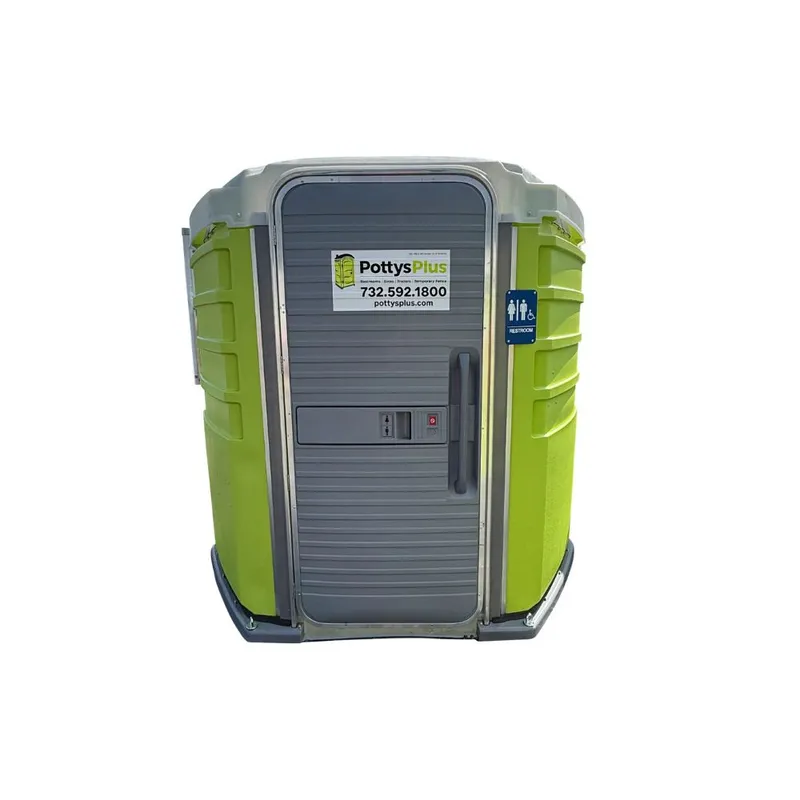
ADA Compliant Unit
Required at public events and public-works sites — zero-step entry, handrails, 360° turning radius.
View unit →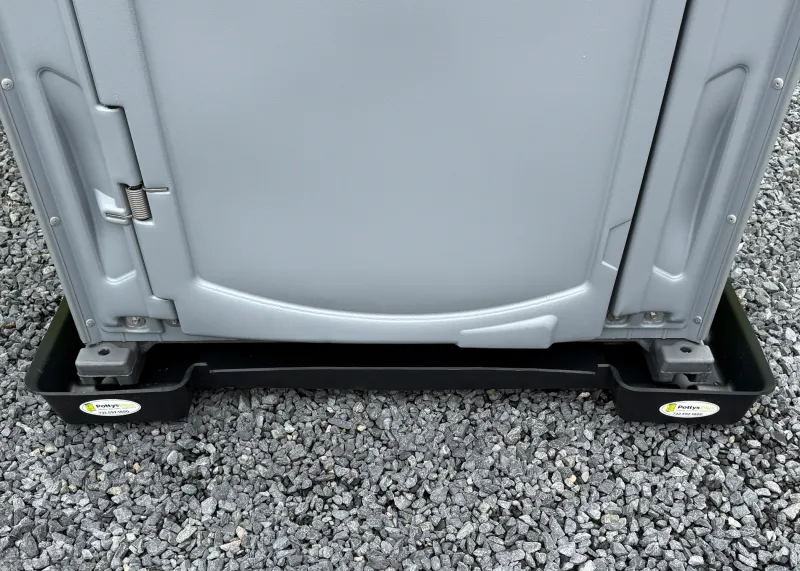
Containment Tray
Secondary containment for placements near storm drains or on pavement — satisfies NJPDES expectations.
View unit →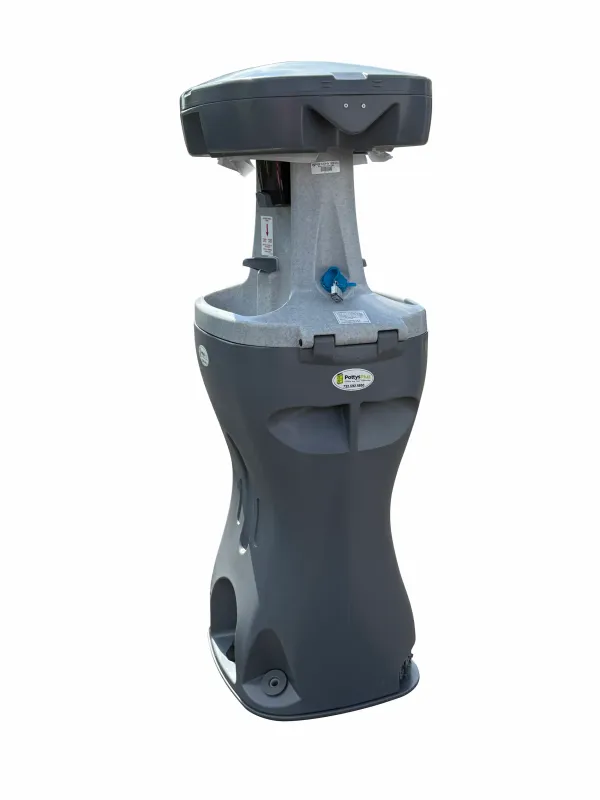
Dual Hand Wash Station
OSHA requires washing facilities on hazardous-material scopes; health inspectors expect handwashing at food events.
View unit →