The Statutory Framework at a Glance
When someone asks "what does New Jersey law say about portable toilets," the honest answer is: several different things, depending on where the unit sits. Four bodies of law interlock:
| Body of Law | What It Covers | Who Enforces It |
|---|---|---|
| Title 26 (NJ Statutes) | Health and vital statistics — creates local boards of health and gives them power to adopt and enforce sanitary ordinances | Local & county boards of health |
| Title 8 (NJ Admin. Code) | Department of Health rules — sanitary codes for campgrounds, public recreational bathing, youth camps, and mass gatherings | NJ Dept. of Health via local health agencies |
| Title 7 (NJ Admin. Code) | NJDEP environmental rules — septage hauling, disposal, stormwater | NJDEP |
| Municipal codes | Zoning, right-of-way permits, nuisance ordinances, screening requirements | Municipal offices & code enforcement |
For the NJDEP environmental layer — licensed waste transport, disposal manifests, and containment near storm drains — see our NJ portable toilet regulations guide. This page focuses on the public-health layers: Title 26 and Title 8.
Title 26: Local Boards of Health and Their Powers
Title 26 of the New Jersey Statutes is the backbone of public-health law in the state. For portable sanitation, three of its features matter most:
- Every municipality must be served by a board of health. Many towns delegate to a county or regional health commission, which is why your "local" health inspector in NJ is often a county employee.
- Boards of health may adopt sanitary ordinances. Title 26 empowers local boards to write and enforce ordinances covering nuisances, waste, and sanitation — which is where local rules on toilet placement, servicing, and event sanitation plans originate.
- Boards of health can inspect, order abatement, and fine. A unit that becomes a nuisance — overflowing, unserviced, or sited too close to food service or a neighboring property — can draw an abatement order and per-day penalties under local ordinance.
Because Title 26 delegates power downward, the practical rule set varies by county and even by town. That's why a placement that sails through in one county can require a sanitation plan in the next. When we deliver for events, we routinely coordinate with the county health office on unit counts and service schedules — reviewers commonly apply the industry baseline of one unit per 50 guests per 4 hours (see the event capacity guide).
Who actually knocks on your door?
In most of New Jersey, sanitation enforcement arrives as a county or regional health inspector acting under Title 26 authority, enforcing a local sanitary ordinance. NJDEP appears only when waste handling or water protection is in play, and OSHA only when it's a workplace. Municipal code enforcement handles zoning and right-of-way complaints.
Title 8: The State Sanitary Codes
Title 8 of the New Jersey Administrative Code contains the Department of Health's regulations. Several chapters set explicit toilet requirements for specific facility types, and portable units are an accepted way to meet them when properly serviced:
- Campgrounds. The campground sanitary code sets minimum toilet counts scaled to campsite capacity, with documented, regular servicing. Licensed campgrounds are inspected against these counts — keep your provider's service records on file, because they are your proof of compliance.
- Public recreational bathing. Beaches, lakes, and pool facilities must provide toilet facilities within a reasonable distance of the bathing area, scaled to expected attendance.
- Youth camps. Camp sanitary codes specify toilet-to-camper ratios and handwashing requirements.
- Mass gatherings. Large public assemblies trigger sanitation-plan requirements — toilet counts, handwash stations, and a service schedule are reviewed as part of the permit application.
If you operate a seasonal facility — a campground, swim club, marina, or park — the pattern across all these chapters is the same: a required minimum count, a serviceability standard, and documentation. Our service frequency guide covers how to match the pumping schedule to real usage so inspection day is a non-event.
When Is a Permit Actually Required?
Renting a portable toilet never requires a permit by itself. Permits attach to the event, the facility, or the placement:
- Public events over county attendance thresholds — temporary event or mass-gathering permit, with the sanitation plan reviewed by the county health department.
- Licensed facilities (campgrounds, youth camps, bathing places) — the facility license itself imposes the Title 8 toilet counts.
- Street or right-of-way placements — a municipal street-occupancy or right-of-way permit.
- Construction sites — no sanitation permit, but the building permit obligates the GC to provide OSHA-compliant facilities; see the OSHA requirements guide.
Private placements on private property — a backyard party, a home renovation — normally require no permit at all.
How Enforcement Plays Out
Sanitation enforcement in NJ is complaint-driven far more often than it is proactive. The typical sequence:
- Complaint or inspection — a neighbor, attendee, or routine facility inspection flags a problem.
- Notice of violation — the health authority issues a notice with a compliance deadline, usually citing the local sanitary ordinance or the applicable Title 8 chapter.
- Abatement order and penalties — unresolved violations escalate to abatement orders and per-day fines; for events, an unresolved sanitation issue can suspend the gathering permit.
Almost every real-world violation traces back to one of two causes: too few units for the crowd, or units that stopped being serviced. Both are solved at the planning stage — size the order correctly (start with how many porta potties do I need?) and lock in a documented service schedule.
Related Reading
For the environmental and county-permit picture, read the NJ portable toilet regulations guide — it pairs with this page to complete the state-law picture. Job sites should also review the OSHA sanitation requirements, and public events the ADA requirements guide. Or browse all Resources & Guides.
Units That Keep Placements Legal
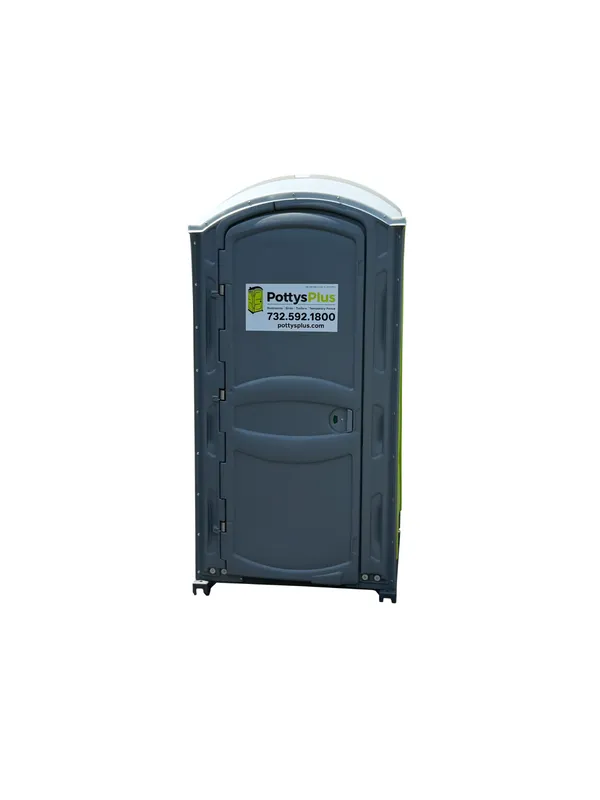
Standard Porta Potty
The workhorse for events, facilities, and job sites — weekly pump, sanitize, and restock included.
View unit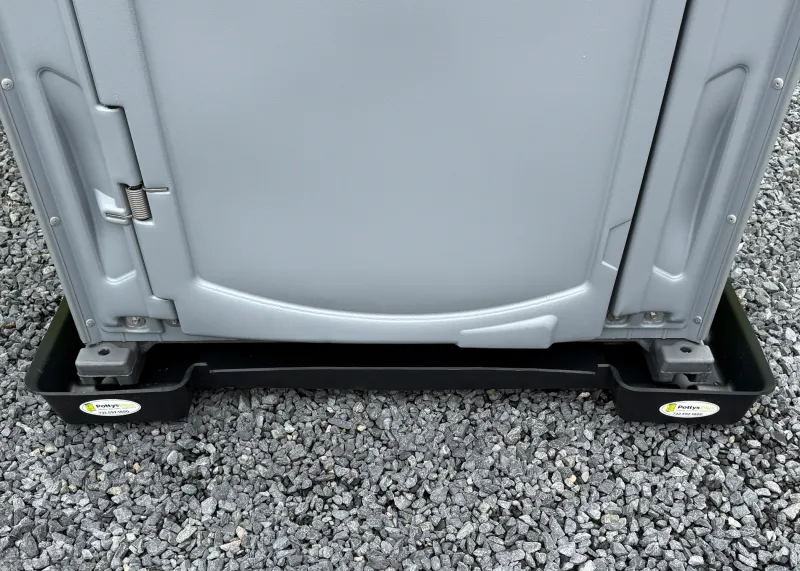
Containment Tray
Secondary containment for placements near storm drains, waterways, or environmentally sensitive ground.
View unit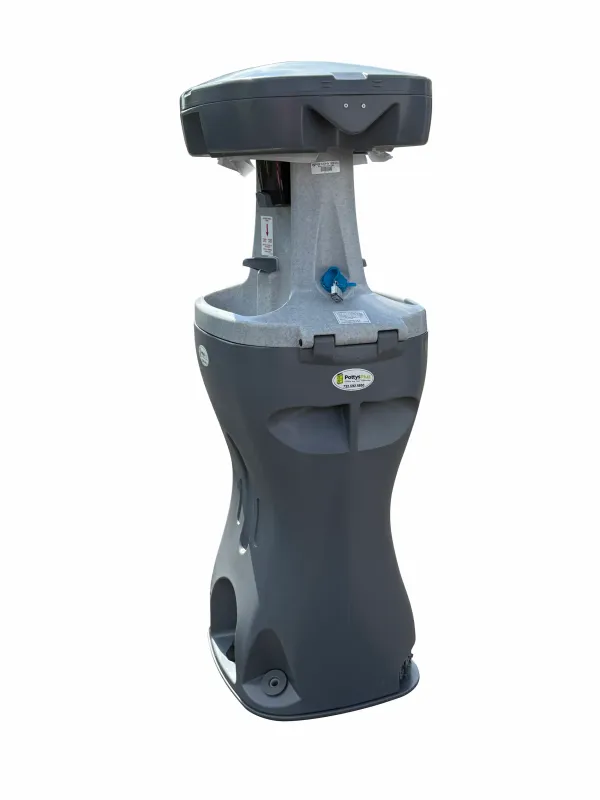
Dual Hand Wash Station
Health inspectors treat handwashing near food service as non-negotiable — this covers it, no plumbing needed.
View unit