How Many Units for a Wedding?
Weddings run long — a ceremony, cocktail hour, dinner, and dancing routinely total 6–8 hours — and almost all of them serve alcohol. That pushes counts above the generic event baseline:
| Guest count | Recommended units | Suggested mix |
|---|---|---|
| Up to 75 | 2 | 2 VIP, or 1 VIP + 1 standard |
| 75–150 | 3–4 | 2 VIP + 1–2 standard + hand wash station |
| 150–250 | 5–6 | 2–3 VIP + 2–3 standard + hand wash station |
| 250–400 | 8–10 | 3 VIP + 5–7 standard + 2 hand wash stations |
If elderly guests or guests with mobility needs are attending — and at most weddings they are — include one ADA-accessible unit with a firm, level approach path.
How many units do you need?
Run your exact guest count and reception length through the free unit calculator, or see the full math in How Many Porta Potties Do I Need?
Guest Comfort: Why Weddings Upgrade
The single best upgrade for a wedding is swapping standard units for VIP flushing units. Guests step into a lit interior with a freshwater foot-pump flush, a real handwashing sink, and a mirror — which matters enormously to guests in formal wear reapplying makeup or adjusting a tie. For most weddings under 150 guests, an all-VIP fleet costs only modestly more than mixed and removes the "porta potty at a wedding" reaction entirely.
Add a dual hand wash station near the dining tent regardless of unit choice. Caterers appreciate it, guests use it before dinner, and it keeps traffic out of the restroom line at the exact moment everyone washes up at once.
Placement: Out of Sightlines, Not Out of Reach
- Never in the ceremony backdrop. Walk the ceremony site and check every photo angle — the altar view, the aisle view, and the wide shot from the back row. Units should sit behind a hedge, tent, or building line relative to all three.
- Within a 1–2 minute walk of the reception. Guests in heels won't cross a field. A landscaped corner 75–150 feet from the tent is the sweet spot: findable, lit, and invisible from the head table.
- On firm, level ground. Lawns get soft after rain; a plywood pad under each unit prevents tilting and keeps hems and heels clean at the threshold.
- Lit after sunset. String lights or a lantern path to the restroom area is a small touch that guests genuinely notice — and it prevents the far units from going unused.
- Truck access on delivery day. Units need to be placed within about 25 feet of where our truck can park. Confirm gate widths and any lawn-crossing rules with the venue before delivery.
The Booking Timeline
New Jersey wedding season concentrates demand in May–June and September–October, and luxury inventory is finite:
- 8–12 weeks out: reserve VIP and ADA units for peak-season Saturdays. These are the units that sell out first.
- 4 weeks out: confirm final guest count and adjust quantities — adding a standard unit late is usually easy; adding a VIP unit late is not.
- 1 week out: confirm delivery day (typically Thursday or Friday for a Saturday wedding), placement spot, and venue access with your coordinator.
- After the wedding: we pick up early the following week — nothing for you or the venue to manage.
Backyard and private-property weddings rarely need any permit in NJ. If your reception is on park or municipal land, check the NJ regulations guide for your county's temporary-event rules.
Book Your Wedding Units
See exact pricing online in under two minutes — delivery, servicing, and pickup are always included — or call 732-592-1800 and we'll help you pick the mix. For broader outdoor-event planning (placement banks, food-service handwashing, permits), start with the outdoor event porta potty guide or our event rental service page.
The Wedding Fleet
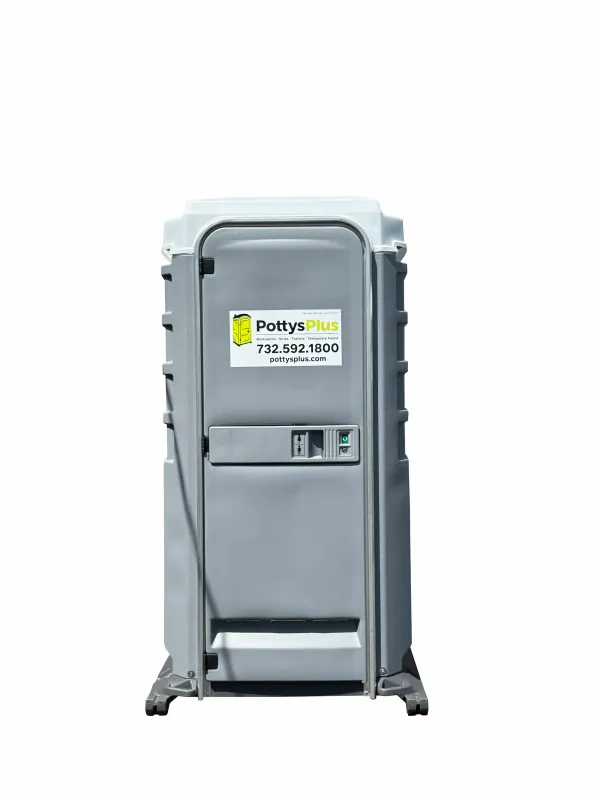
VIP Flushing Unit
Freshwater flush, vanity sink, and mirror — the unit that makes guests forget it's portable.
View unit →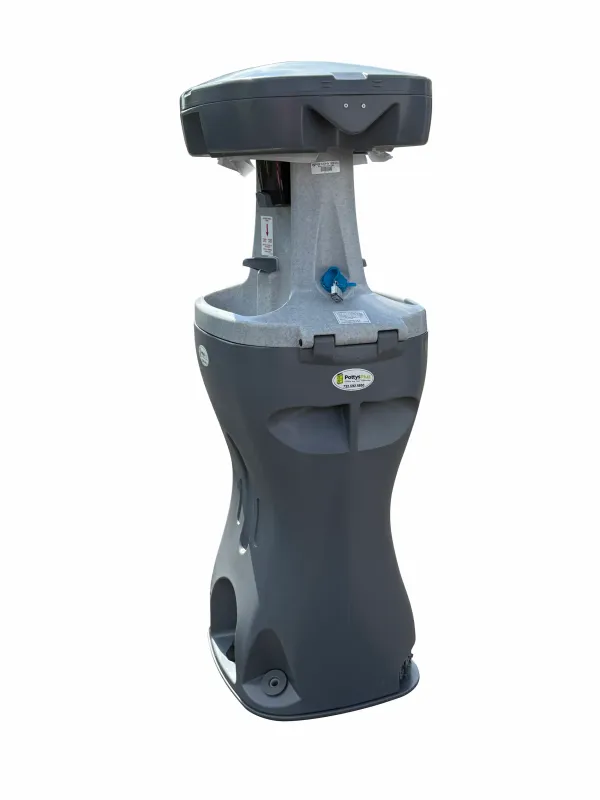
Dual Hand Wash Station
Two foot-pump sinks with soap and towels — place one near the dining tent.
View unit →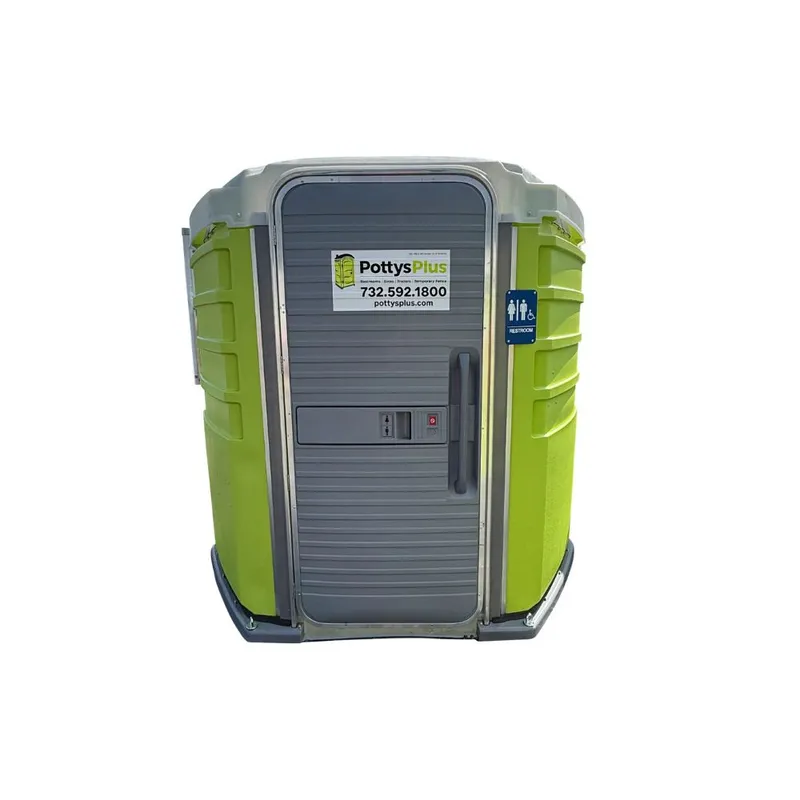
ADA Compliant Unit
Zero-step entry and handrails — the considerate choice when grandparents are on the guest list.
View unit →