The Full Comparison
| Unit | Flush | Sink | Accessible | Relative Price | Best For |
|---|---|---|---|---|---|
| Standard | — | — | — | $$ | Job sites, most events — the workhorse |
| Flushing + Urinal | Foot-pump | — | — | $$ | Longer rentals where in-unit experience matters |
| VIP with Sink | Freshwater | Yes + mirror | — | $$$ | Weddings, upscale & client-facing events |
| ADA Compliant | — | — | Full ADA | $$$ | Public events, public-works & federal projects |
| XLT Wheelchair Accessible | — | — | Flat floor, 50% larger | $$$ | Wheelchair access, assisting a child, changing coveralls |
| Trailer-Mounted | — | — | — | $$$ | Road, utility & farm crews that move all day |
Relative price tiers hold steady even as live rates change with duration and quantity — exact figures for your dates are always in the online checkout.
Standard: The Default for a Reason
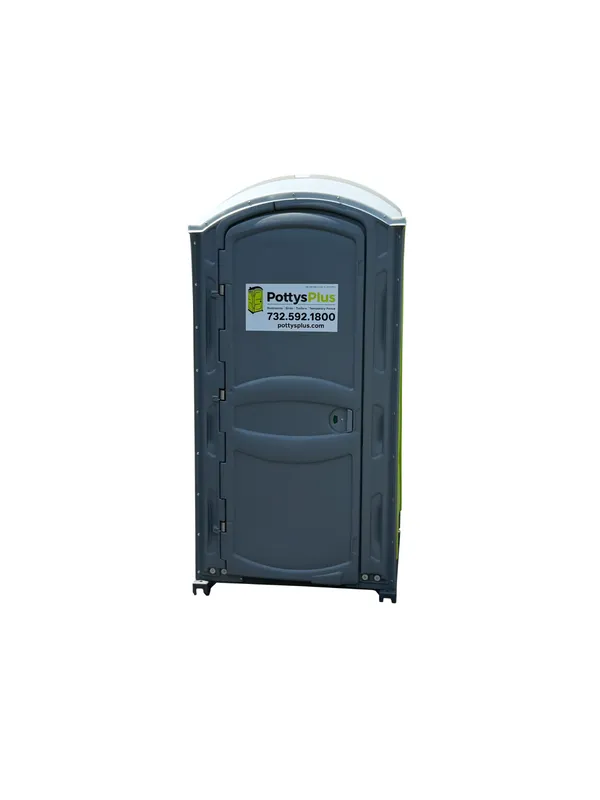
The standard porta potty is the lowest cost per seat and covers the honest requirement of most rentals: a clean, weather-resistant, single-occupant unit with an interior urinal, serviced weekly. If your renters are a work crew or a casual crowd, and nobody's wearing a wedding dress, start here. Upgrade only when a specific need — comfort, accessibility, mobility — justifies the premium.
VIP: When the Restroom Is Part of the Experience
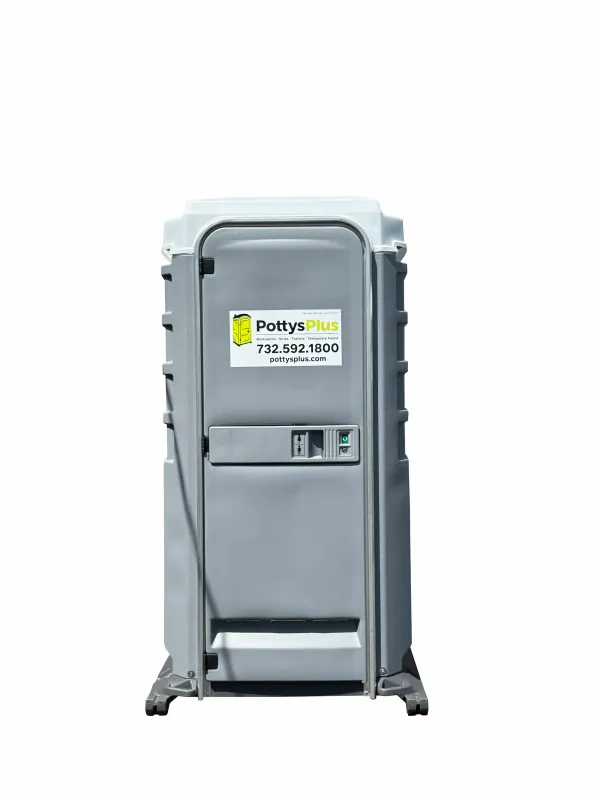
The VIP unit adds a freshwater flush, hands-free flushing, and a vanity with sink and mirror. It exists for events where guests will judge the restroom: weddings, galas, corporate hospitality, backyard milestone parties. The practical pattern at large events is a mixed fleet — VIP units near the main gathering, standard units covering volume. Guests notice; your budget barely does.
ADA & XLT: Accessibility, Two Ways
The ADA compliant unit is the regulatory answer: zero-step entry, extra-wide self-closing door, handrails, and a full 360° turning radius. Public events and public-works or federally funded construction typically require at least one — see the ADA requirements guide for when it's mandatory. The XLT takes a different angle: 50% more floor area with a patented flat-floor system, which makes it the pick when someone needs room to assist — a caregiver, a parent with a small child, or a worker changing coveralls.
Trailer-Mounted: The Unit That Follows the Work
The trailer-mounted unit is a single standard-style porta potty on a road-legal towable chassis. It costs more than a standard unit, but it replaces something more expensive: repeated re-deliveries (or long walks) as a paving, utility, or agricultural crew moves down the route. If your work face moves daily, the trailer pays for itself in crew time. If your site is fixed, skip it and put the difference into service frequency.
The 30-second decision rule
Fixed site, working crowd → Standard. Guests in nice clothes → VIP (plus standards for volume). Open to the public or publicly funded → add an ADA unit. Wheelchair users or assisted use expected → XLT. Work that moves every day → Trailer-mounted. Mixed situation? Mix the fleet — that's what everyone with experience does.
Beyond the Toilet: Round Out the Order
Whatever class you land on, the add-ons follow the same logic at much smaller numbers: a dual hand wash station where food is served or the scope requires washing facilities, sanitizer stands for guest counts, and containment trays anywhere spill protection matters. For how many units of any class you need, use the sizing guide or the calculator; for what the total will run, the NJ cost guide is the companion to this page.
Compare the Contenders
VIP Unit with Sink
Freshwater flush, vanity, sink and mirror — for events where guests judge the restroom.
View unit →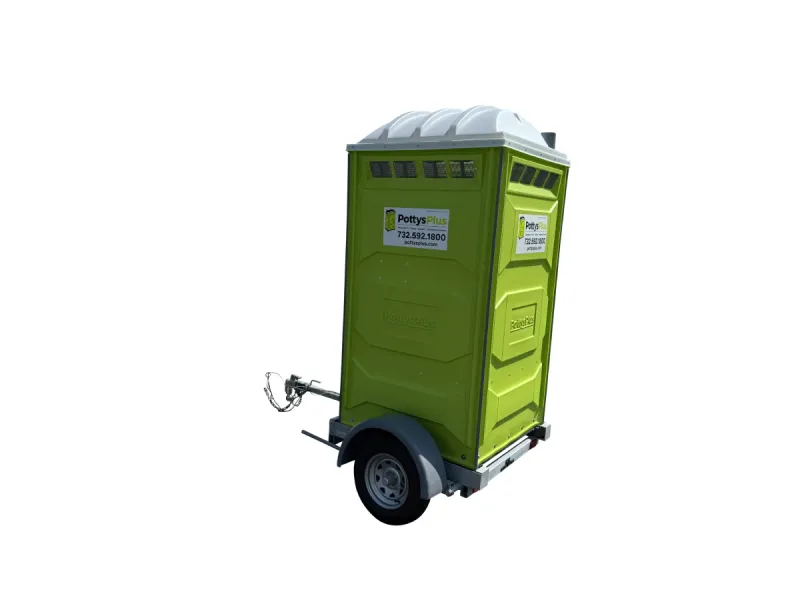
Trailer-Mounted Unit
One porta potty on a towable chassis — for crews whose work face moves every day.
View unit →