
Home › Resource Hub › Winter Portable Toilet & Restroom Trailer Operating Guide
Winter Portable Toilet & Restroom Trailer Operating Guide (NJ Cold Weather Tips)
This field-tested guide explains how to keep portable toilets and restroom trailers operating safely during New Jersey winters—freezing temps, snow events, plowing, access issues, and service planning. Use it to prevent downtime, reduce frozen-unit issues, and keep sites compliant.
Quick Winter Answers
Can portable toilets freeze? Yes—cold temperatures can affect door hardware, venting, and fluids if units aren’t winterized. Regular service and proper placement reduce issues.
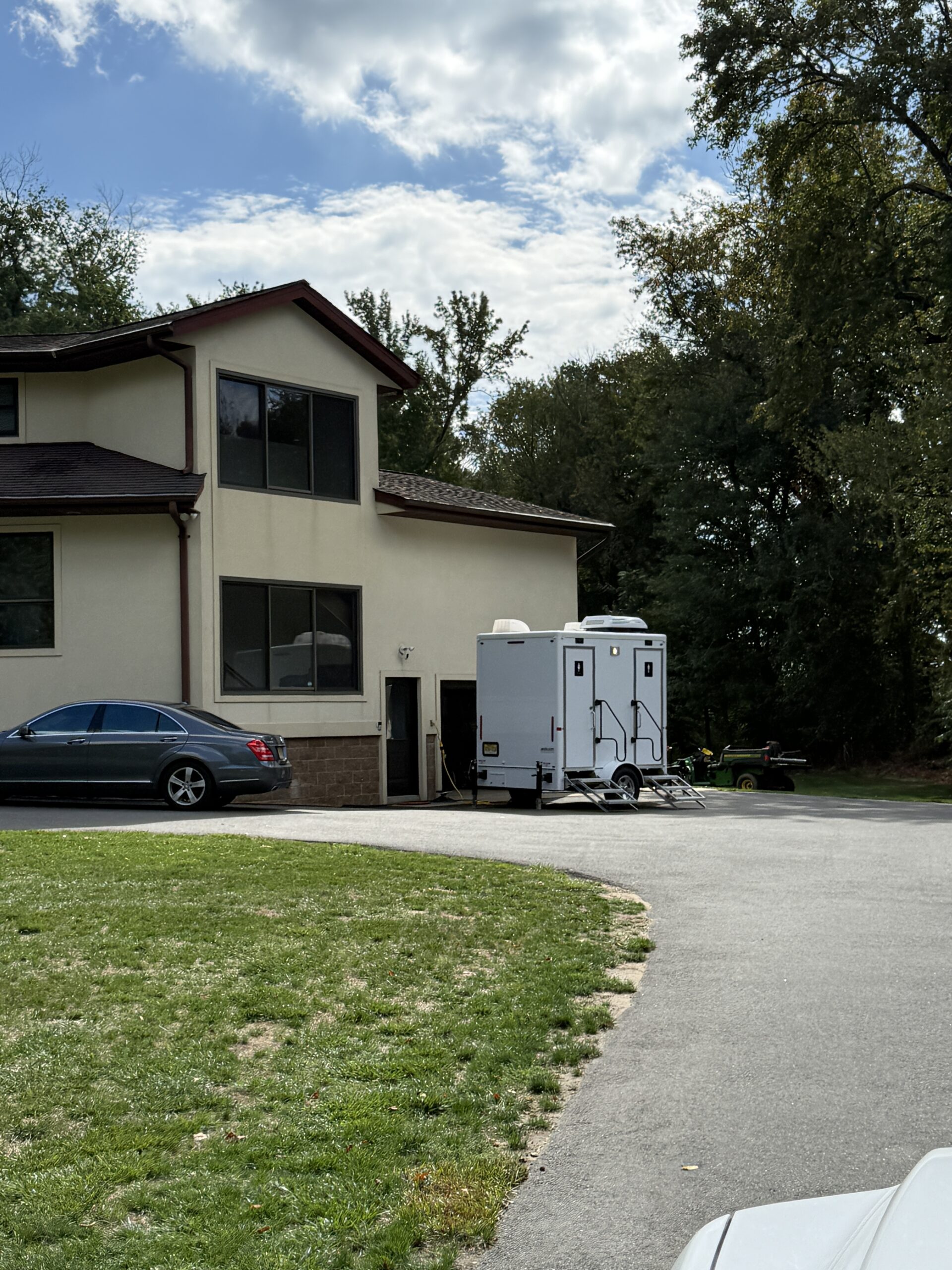
Do restroom trailers work in winter? Yes—trailers can run year-round, but winter performance depends on reliable power/heat, protected water lines, and safe site access.
What matters most? (1) winterization, (2) service schedule, (3) plow/route access, (4) placement on stable ground, (5) clear communication before storms.
Why winter restroom plans fail (and how to prevent it)
- Blocked access on service day: plow piles, locked gates, parked equipment, or unshoveled paths.
- Wrong placement: low spots that flood/ice, soft ground that shifts, or long carry distances in snow.
- Underestimating demand: fewer units + harsh weather leads to faster mess and service strain.
- No storm plan: crews don’t coordinate delivery/service timing before a freeze or snow event.
If you manage a job site, this guide pairs well with: Construction Restroom Compliance & Planning and the Portable Restroom Troubleshooting Guide.
How to run portable toilets & restroom trailers in winter
Use the steps below as a checklist for construction sites, municipal work, and winter events. If you need help choosing placements, see the Portable Toilet Placement Guide.
-
Confirm access and plow plan before delivery.
Identify truck route, gate hours, and where snow will be piled so units stay reachable for weekly service. -
Choose stable, winter-safe placement.
Place units on level ground (avoid low spots), maintain safe walking paths, and keep doors facing away from prevailing wind when possible. -
Set the right service frequency.
Weekly service is common, but winter workwear, shorter daylight, and high traffic can require increased frequency to keep units usable. -
Reduce freeze-related issues.
Keep lids closed, prevent trash/debris in tanks, and avoid “unapproved liquids” that can create clogs or frozen messes. -
For restroom trailers: plan power + heat + water.
Ensure correct electrical supply, heat is maintained, and water lines are protected. For planning, use: Trailer Power, Water & Generator Requirements. -
Prepare for storms (48–72 hours ahead).
If a major freeze or snow event is coming, coordinate service timing and confirm access is cleared for the route. -
Document service and communicate changes.
Provide site contacts, approve alternate placement if needed, and communicate schedule changes during snow events.
Winter placement rules that prevent problems
- Keep a cleared path to each unit.
- Leave space for pumping/service truck access.
- Place on firm, level ground (gravel/plywood as needed).
- Keep units away from snow pile zones.
- Block units behind equipment or locked gates.
- Place in low spots where meltwater refreezes.
- Create long carry distances (slip risk + service difficulty).
- Assume “we’ll plow later”—access is the #1 winter issue.
Want examples? See Restroom Placement Diagrams & Examples.
Winter best practices for construction sites in NJ
- Right-size units: winter demand can spike on busy crews—consider an extra unit to reduce downtime.
- Add hygiene: place handwash near entry points or break areas when feasible.
- Prevent “dry run” problems: keep gates unlocked on service day and clear access after plowing.
- Know NJ expectations: use the NJ Compliance Guide as a baseline.
For cost expectations, see: Construction Portable Toilet Pricing (NJ) and the NJ Pricing Guide.
Winter delivery considerations by NJ location
Winter service is strongly influenced by access, traffic patterns, and plowing logistics. These pages include local delivery notes and use cases:
For statewide coverage, visit: Portable Toilet & Restroom Rentals in New Jersey →
Winter restroom FAQ
Can portable toilets be used in freezing temperatures?
What causes the most winter problems on job sites?
Do restroom trailers work in winter?
How often should units be serviced in winter?
How should I prepare my site before a snowstorm?
Need winter-ready portable restrooms in New Jersey?
Tell us your location, crew size or attendance, rental duration, and winter access details. We’ll recommend unit count, placement, and a service schedule that works in cold weather.